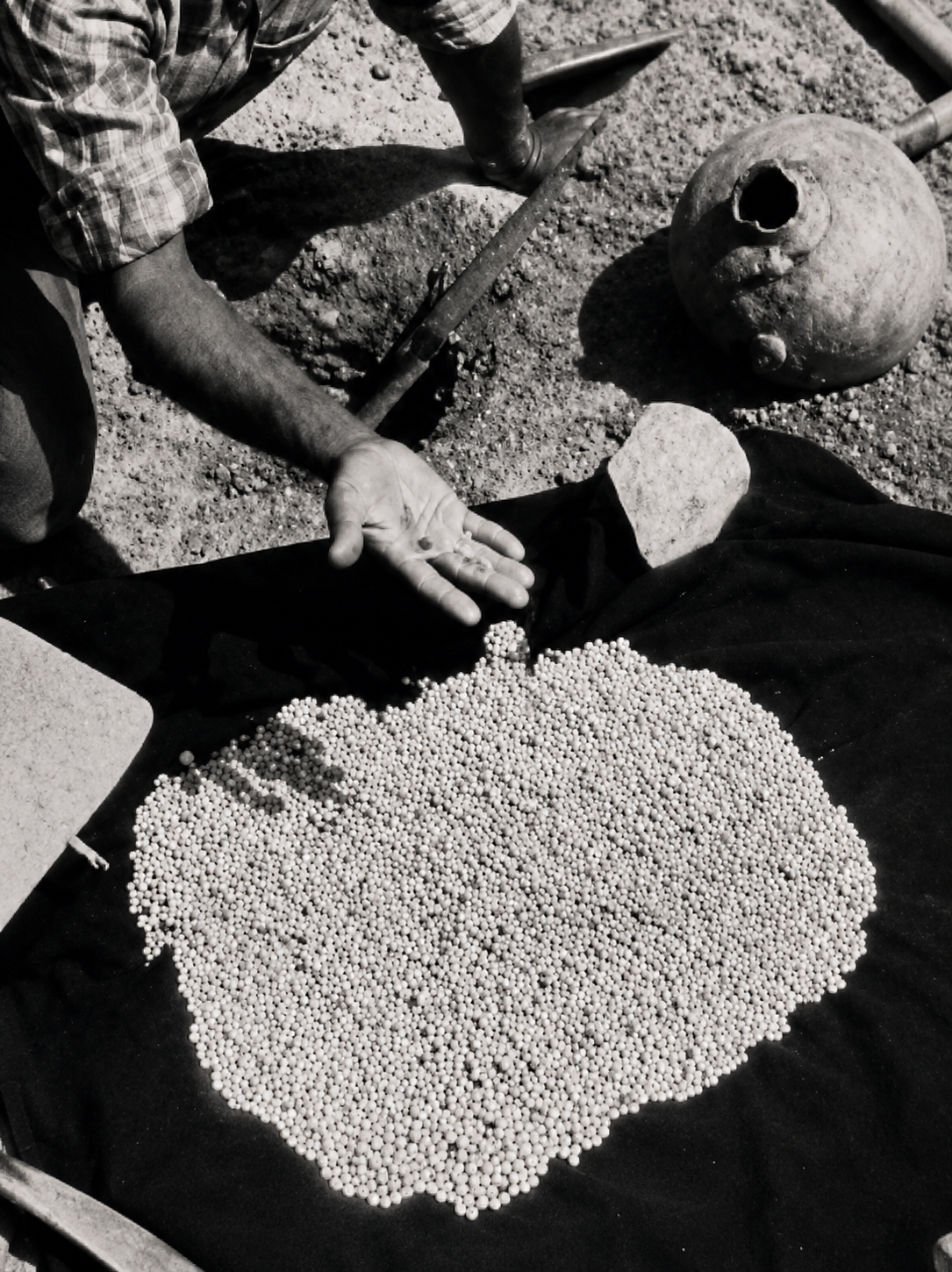
Discovery
The rediscovery of a forgotten pearl assemblage connected to the earliest Caribbean pearl fisheries.
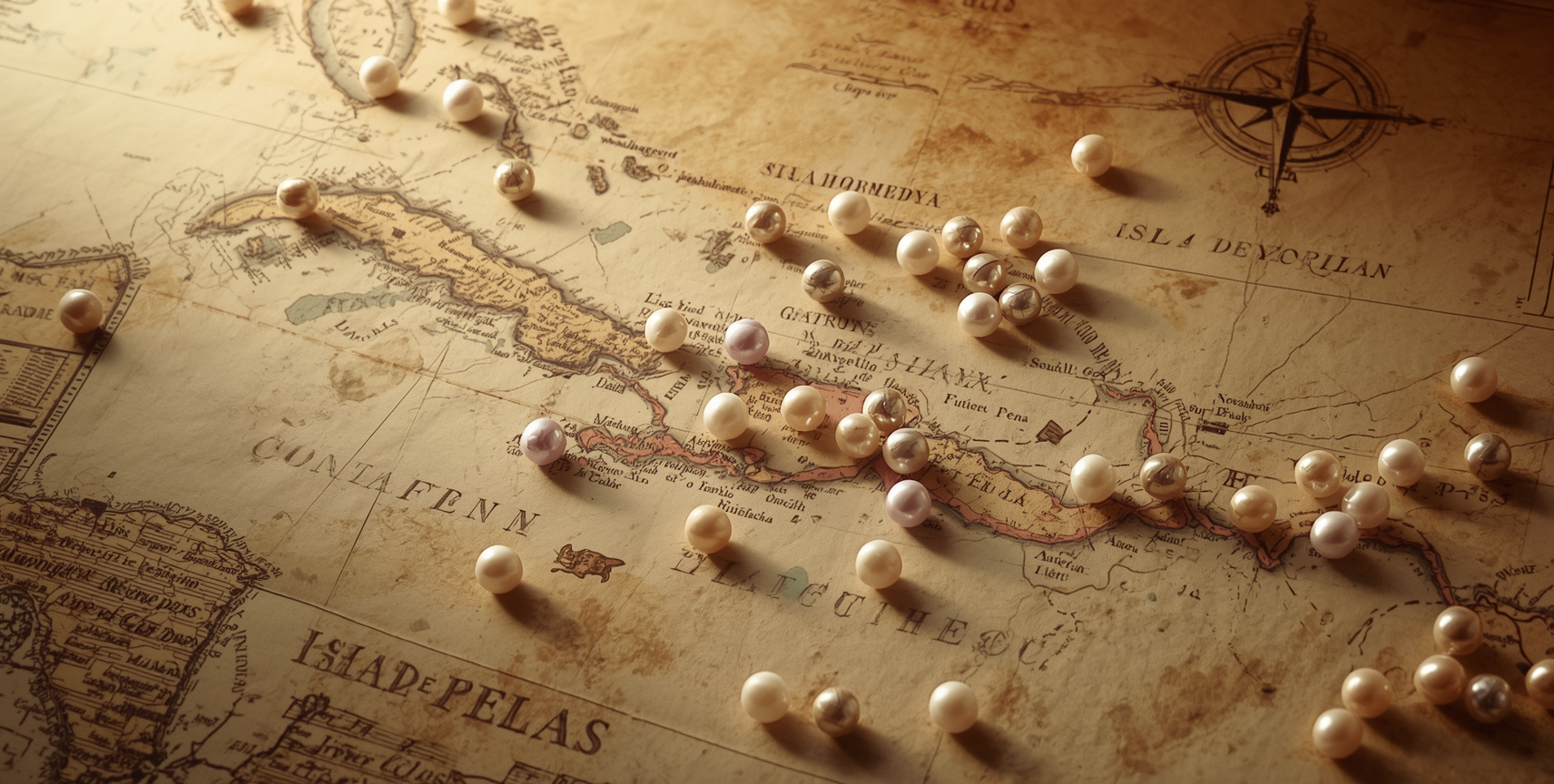
Nueva Cádiz and the Pearl Coast
In 1498, during his third voyage to the Americas, Christopher Columbus reached the waters surrounding the Gulf of Paria and the small arid islands off the northeastern coast of South America. Indigenous communities wore large natural pearls as adornment, revealing to the Spanish the existence of extraordinarily rich pearl fisheries in the Caribbean.
Within only a few years, the nearby island of Cubagua became the center of one of the first major extractive economies in the Americas. Pearls gathered from the Caribbean fisheries transformed the remote island into Nueva Cádiz, an early Spanish settlement built almost entirely upon the wealth of natural pearls.
By the 1510s and 1520s, ships regularly carried pearls from the region across the Atlantic to Seville and beyond. Chroniclers, merchants, royal officials, enslaved divers, and Indigenous communities all became part of a rapidly expanding network tied to the pearl trade.
Long before the great silver mines of the Americas reshaped Europe, pearls from the Caribbean represented one of the earliest forms of New World wealth flowing into the Spanish Empire.
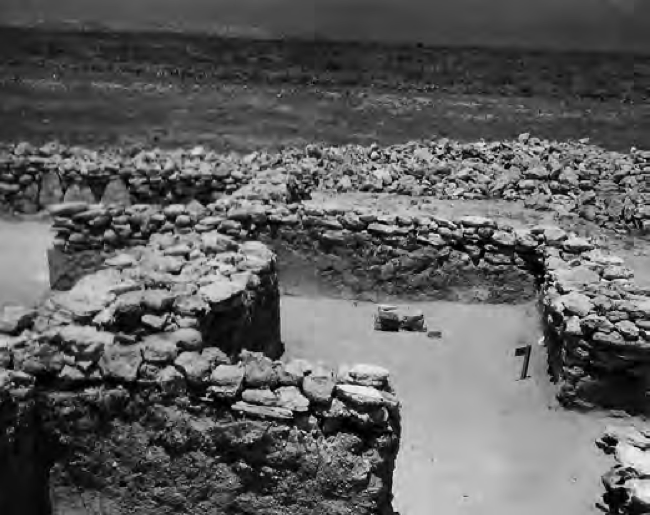
The 1954 Discovery
The ruins of Nueva Cádiz had been largely forgotten for nearly four centuries when systematic archaeological work resumed on Cubagua Island in the mid-twentieth century. The excavations brought together archaeologists from multiple countries in one of the earliest collaborative investigations of the site — a place that had once stood at the center of the early Caribbean pearl trade and had since returned to little more than windburned limestone and silence.
On December 29, 1954, during the excavation of a colonial-era structure, a ceramic vessel was reportedly uncovered beneath the remains of a building wall several inches underground. The jar contained a large quantity of natural pearls, among them specimens bearing unmistakable signs of human workmanship: small perforations consistent with the drilling traditions practiced by Indigenous peoples of the Caribbean centuries before sustained European contact. That detail alone placed the discovery at the intersection of two worlds — the maritime cultures of the pre-contact Caribbean and the colonial economy that would ultimately consume them.
What became of the assemblage in the decades that followed remains a matter shaped as much by absence as documentation — by what was not preserved, not published, and not consolidated within any single archive currently known to this project. The subsequent history of the reported assemblage remains only partially understood, leaving a number of historical and scientific questions that continue to be explored through ongoing research.