Spanish Pearl Classification System
How the Spanish Named, Graded, and Priced the Pearls of Cubagua — and What Those Words Tell Us Today
Every commodity requires a language. Before a pearl could be taxed, traded, smuggled, or set into the regalia of a European queen, someone in Nueva Cádiz had to describe it — had to find words for its shape, its surface, its weight, its color, and the quality of light it carried within itself. The Spanish who organized the Caribbean pearl fisheries from the early sixteenth century onward were not gemologists in any modern sense. They were merchants, administrators, and royal tax collectors working with a resource that defied easy standardization. No two pearls were alike. No fixed scale existed. And yet a functional, remarkably precise classification system emerged from the customs houses and weighing rooms of Cubagua — a vocabulary assembled from necessity, drawn from Latin, Arabic, and Portuguese antecedents, and refined through decades of commercial practice at the edge of the Atlantic world.
That vocabulary is one of the most underexamined dimensions of the Caribbean pearl trade. It survives in the records of the Archivo General de Indias in Seville — in royal decrees, quinto real registers, merchants' inventories, and the accounts of the Veedor de Perlas, the Crown-appointed pearl inspector whose job was to stand at the weighing table in Nueva Cádiz and impose order on a harvest that resisted it. Enrique Otte, whose definitive 1977 study Las Perlas del Caribe drew exhaustively on those records, reconstructed the classification system in detail. What he found was not a simple hierarchy but a layered, overlapping set of categories organized around five primary qualities: shape, size, weight, color, and orient — the Spanish word for the inner luminosity that made one pearl worth ten times its identical twin.
Shape: The Dominant Criterion
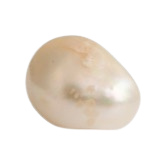
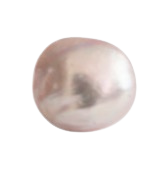
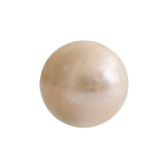
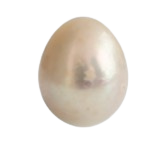
Shape was the first and most consequential criterion in the Spanish classification system, because shape determined a pearl's commercial destination. A perfectly spherical pearl could be strung in a necklace, matched with others of its kind, and sold to European courts at a premium. An irregular pearl required a jeweler's imagination to find its use. The distinction was not merely aesthetic. It was economic, fiscal, and architectural — in the sense that the entire organizational logic of the pearl trade was built around it.
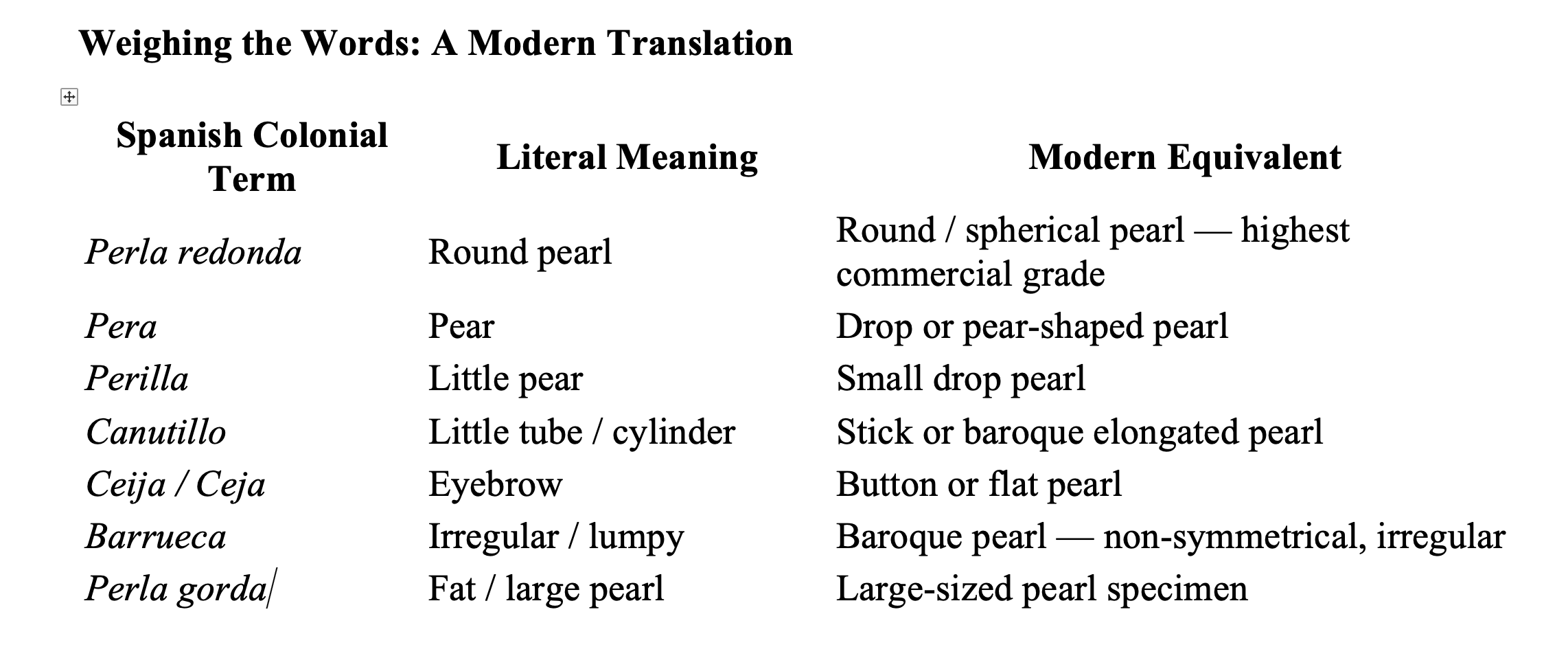
The Spanish recognized five primary shape categories, each with its own market value and its own terminology:
Redondas — round — were the most coveted. The word is simply the feminine form of redondo, round, and it required no elaboration. A perla redonda was a sphere, or close enough to one that the naked eye could not detect the deviation. They were also the rarest. Among the millions of pearls extracted from the Cubagua beds across four decades, redondas of significant size were exceptional finds. When Otte analyzed the production records, the quantities of true redondas at each size tier were consistently small fractions of the total harvest.
Peras — pear-shaped — were the second most valued category. The word is identical to the Spanish for pear, the fruit, and the analogy is exact: a pearl wider at one end than the other, tapering toward a point or a rounded apex. Peras of fine quality and significant size could command prices approaching those of redondas because they lent themselves to pendant settings and to the elaborate earring designs that were becoming fashionable in European courts precisely as the Cubagua fisheries were at their peak.
Perillas — diminutive of pera — were small pear-shaped pearls, the same form at smaller scale. The Spanish pearl vocabulary made extensive use of diminutives to indicate size within shape categories, a linguistic economy that allowed the customs records to convey both form and scale in a single word.
Canutillos — literally little tubes or little cylinders — described elongated, cylindrical pearls, longer than they were wide, often irregular in their internal structure. The word comes from caño, a pipe or tube, and it captures the shape precisely. Canutillos were used in embroidery and in the decoration of ecclesiastical vestments, where their elongated form could be stitched in rows along seams and hems. They occupied a specific and consistent market niche — not the luxury tier of redondas and fine peras, but a reliable commercial category with established buyers in the textile trades of Seville and Genoa.
Ceijas — also spelled cejas in some documents, from the Spanish for eyebrow — described flat or lens-shaped pearls, wider than they were deep, curved on one face. The analogy to the arched form of an eyebrow captures something real about these pearls' profile. They were less valued than the rounder categories because their shape limited their use in jewelry, but they appeared in abundance in the Cubagua harvest and were traded in bulk.
And then there was the category that would give the modern world one of its most enduring aesthetic concepts.
Barruecos — or barruecas in some regional usages — were irregular pearls of no consistent geometry: lumpy, asymmetrical, multi-lobed, defying any single descriptive analogy. The word itself is of disputed but fascinating etymology. It appears to derive from Proto-Celtic verroccon (large rock) through Latin verruca (wart, raised place), with possible influence from Arabic burāq (hard earth mixed with stones), and arrived in Spanish as a term for an irregular, lumpen surface. As a description of pearls, it was entirely apt. As Molly Warsh established in her landmark study American Baroque, the word barrueca — first employed specifically in the Venezuelan fisheries to describe irregular pearls from Cubagua — traveled from the pearl trade into French as baroque and into English in the same form, eventually becoming the name for the most extravagant artistic style in European history. The word that now describes the ceiling of the Palace of Versailles originated on the weighing table of a customs house on a waterless island off the coast of Venezuela, used by a Spanish tax collector to describe a misshapen pearl that didn't fit any other category.
Size: The Hierarchy of Weight
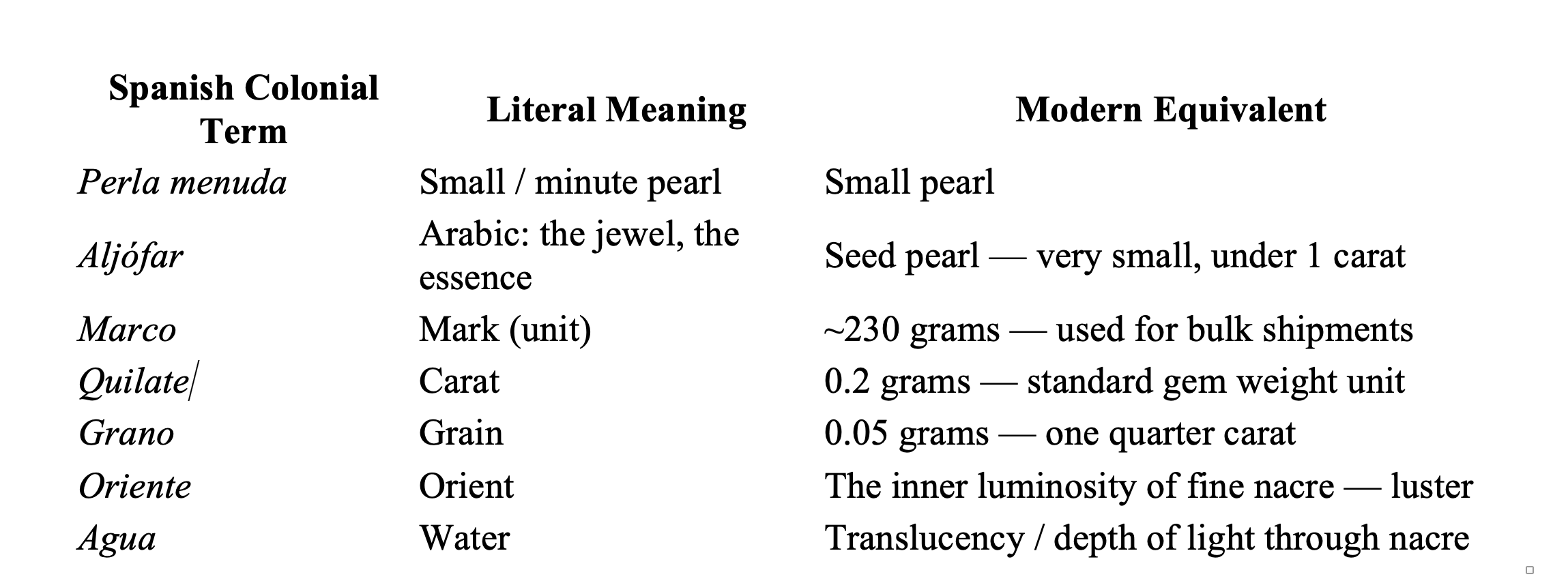
Alongside shape, the Spanish system classified pearls by size — and size was measured not visually but gravimetrically, through weight. The primary unit was the marco, equivalent to approximately 230 grams, which was divided into 8 onzas, 64 ochavas, and 4,608 granos. For individual pearls, the operative unit was the quilate — the carat, derived from the Greek kerátion and the Arabic qīrāṭ, both referring to the carob seed, whose weight of approximately 0.2 grams had been used as a measure of precious materials since antiquity. At Cubagua, pearls were weighed and recorded in carats, with the grano (grain, one quarter of a carat, or approximately 0.05 grams) as the smallest practical subdivision.
Otte's analysis of the production records identified a consistent size hierarchy that the market had established independently of any royal decree. Pearls of 2–5 carats — corresponding to a diameter of roughly 6.6 to 8.9 millimeters — constituted the bulk of the Cubagua harvest and the backbone of the commercial trade. Pearls above 10 carats were exceptional and commanded individually negotiated prices that bore no relationship to the per-carat rates applied to ordinary stock. The largest specimens were recorded by name in the royal ledgers rather than by weight alone — objects so rare that their individuality transcended the logic of the bulk system.
The Spanish also used a categorical size vocabulary alongside the gravimetric system:
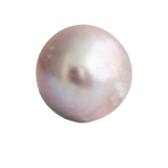
Perlas gordas — fat or large pearls — referred to specimens of significant weight and volume. The adjective gordo (fat, large) was not pejorative but precise: it communicated heft, substance, physical presence.
Perlas menudas — small or minute pearls — described the lower end of the size range.
Aljófar— a word of Arabic origin (al-jawhar, the jewel, the essence) — designated seed pearls: very small, irregular, often less than one carat, harvested in large quantities but valued individually at a fraction of the price of larger specimens. Las Casas used the term specifically when describing the pearl-wearing people of Paria in 1498, distinguishing the small seed pearls on their arm strings from the larger specimens at their necks. By the time of Nueva Cádiz, aljófar was a distinct commercial category in the quinto real records, sorted separately, weighed in bulk, and traded to a different market than the fine pearl trade.
A remarkable passage in Inca Garcilaso de la Vega's Comentarios Reales de los Incas — describing pearls found in a temple in Florida — preserves what may be the clearest literary snapshot of the Spanish size-classification logic in practice: "Las perlas estaban apartadas unas de otras. Por sus tamaños estaban en las arcas, que las mayores estaban en las primeras arcas, y las no tan grandes en las segundas, y otras más chicas, en las terceras, y así, de grado en grado, hasta el aljófar" — "The pearls were separated from one another. By their sizes they were in the chests: the largest in the first chests, the not-so-large in the second, and others smaller in the third, and so, grade by grade, down to the seed pearls." The image is exact: a graduated system of sorting by size, from the largest specimens down through intermediate grades to the smallest — precisely the logic that the Cubagua customs records applied to every shipment.
Color, Orient, and Agua
The Spanish classification system recognized color as a quality criterion but treated it differently from shape and size — more qualitatively, more subjectively, and with a vocabulary that reflects the genuine difficulty of describing pearl color in any period.
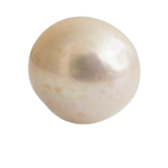
The body colors of Cubagua's Pinctada imbricata pearls ranged from white through cream, silver, and gold to faintly rosy and greenish tones. The Spanish records describe these in terms of their correspondence to European luxury standards: blanca (white), crema (cream), dorada (golden), rosada (rosy). These were not standardized grades but descriptive labels applied by the Veedor to individual lots.
More important than body color, in the Spanish valuation system, was what they called oriente — orient. This was the quality of light that a fine pearl carries within itself: the iridescent, three-dimensional luminosity that modern gemologists describe as the result of light interference between the thin layers of nacre platelets, producing a glow that appears to come from beneath the surface rather than simply reflecting off it. The Spanish pearl merchants understood oriente intuitively if not scientifically — they knew that two pearls of identical shape, size, and body color could differ enormously in value based on the depth and quality of their inner light. Oriente was the quality that made a pearl alive. Its absence made it a stone.
Related to oriente was agua — literally water. In the Spanish pearl vocabulary, a pearl's agua referred to its translucency, the degree to which light penetrated the nacre layers rather than being stopped at the surface. A pearl of fine agua had a quality of depth, of inner space. The term appears in the Archivo General de Indias records for Cubagua alongside oriente as a distinct but related quality — both describing aspects of how light interacts with nacre, but at different scales: oriente referring to the iridescent shimmer at the surface, agua to the translucent depth below it.
Warsh, drawing on the archival records, observed that the Spanish pearl vocabulary was never fully systematized by any royal decree. It was a working language, developed by merchants and customs officials in response to a commodity that resisted standardization. Its terms overlapped, shifted in usage between different ports and different periods, and were applied with significant individual variation. What the system shared across all its variations was an understanding that a pearl's value was determined not by any single quality but by the interaction of all of them — shape, size, weight, color, orient, and water — in combination, and that combination could not be reduced to a formula.
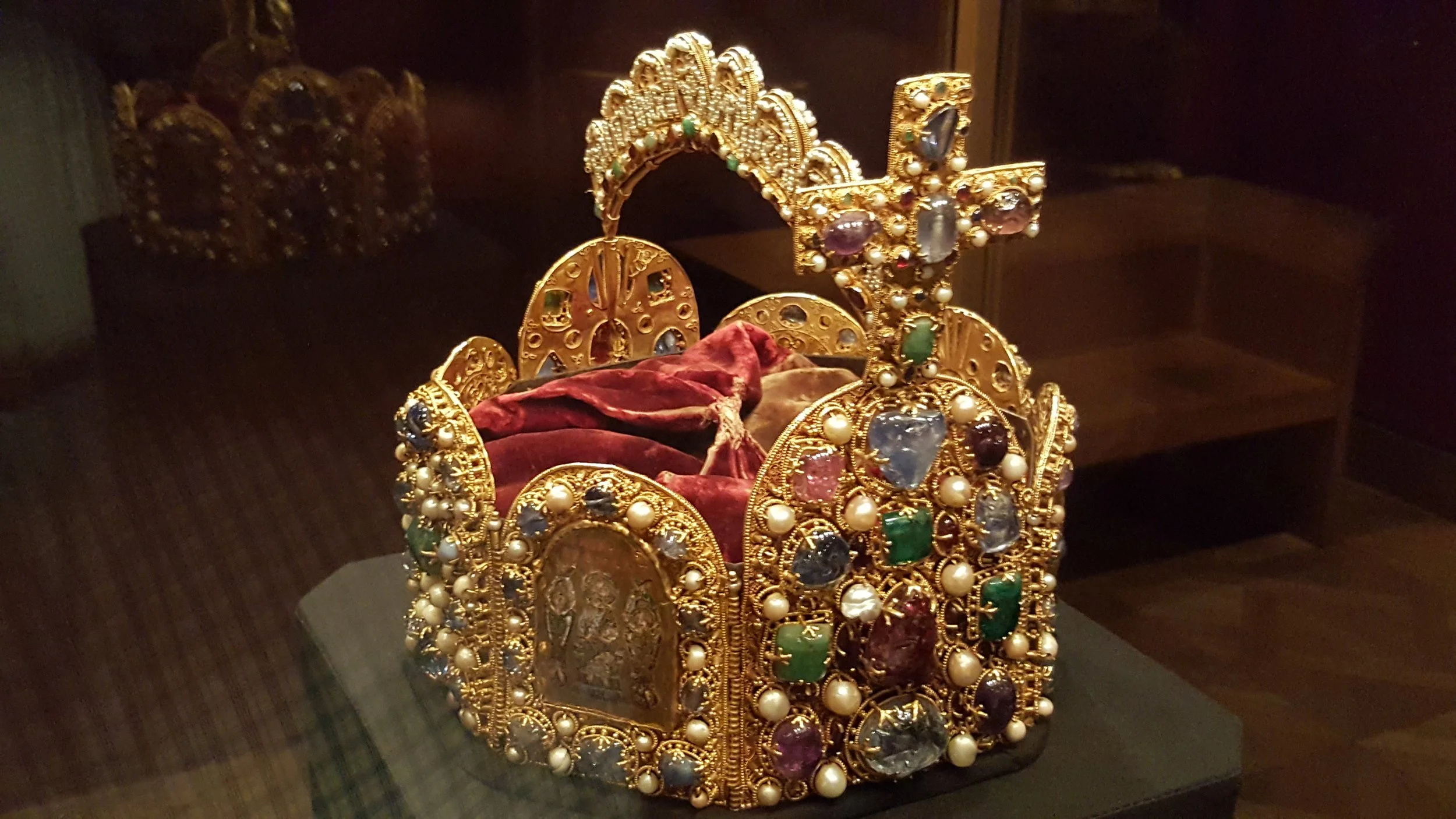
The Imperial Crown - Konrad II - Imperial Treasure Chambers Austria
Pedrería: The Crown's Word for What It Wanted
Above all the individual classification terms — above redonda, barrueca, aljófar, oriente, and agua — stood a single collective noun that the Spanish Crown used when it spoke of pearls in the broadest sense of their value: pedrería. The word, from Old Spanish pedra (stone) and the collective suffix -ería, meant simply a gathering of precious stones — diamonds, emeralds, rubies, and pearls together, the full inventory of what made an empire wealthy and a monarch magnificent. In the early sixteenth century, when the Pearl Coast was producing more gem-quality material than any other source in the Atlantic world, pedrería in the colonial context meant, above all, pearls. They were the pedrería. The other categories named what was within it.
No document makes this more vivid than a 1533 letter from Empress Isabel of Portugal — who had personally overseen the Cubagua operation since 1528 — written directly to the island's royal treasurer. It is, in its way, a remarkable object: a sitting empress reaching across the Atlantic with a precise quality specification, using the classification vocabulary of the weighing table as fluently as any merchant. She requested "2.000 piezas de asientos de perlas que sean de todas suertes, e procurando de las sacar de entre piezas grandes de aljófar redondo grueso que se hallare, de suerte que la haz sea la más redonda que ser pueda y que tenga buen oriente" — "2,000 pieces of pearl settings of all kinds, trying to select from among the large pieces the roundest and thickest aljófar that can be found, of such quality that the face be as round as possible and that it have good orient."
Every term in that instruction — aljófar, redondo, grueso, oriente — was a word from the system documented in this entry. The Empress did not need to explain them. They were the shared language of an empire organized around a single marine resource, spoken with equal fluency in a customs house on a waterless Caribbean island and in the royal chambers of the Habsburg court.
The Future of the Vocabulary — Applied to Physical Pearls
The Spanish classification system was a working taxonomy built for commerce. It was never intended as a scientific framework, and it was never applied to the pearls of Cubagua with the tools that now exist to study them. What the Veedor de Perlas assessed with his eyes and his weighing scale can now be examined with X-ray microradiography, UV fluorescence, DiamondView imaging, and AMS radiocarbon dating. What he described in a word — barrueca, redonda, oriente — can now be measured, mapped, and compared across specimens with a precision that the sixteenth century had no instruments to achieve.
The assemblage from this Codex presents a unique opportunity to close this gap. It contains specimens that correspond to every major category in the Spanish classification vocabulary: true redondas, peras, barruecos of complex morphology, cluster formations of the kind Las Casas described as cuatro ó cinco juntas, and aljófar-class seed pearls. It contains drilled specimens from the pre-contact and early-contact period, and undrilled specimens harvested under the extraction economy. Applied systematically to this assemblage, the Spanish classification framework — combined with modern gemological measurement — could yield something genuinely new: a dataset that correlates the commercial vocabulary of the sixteenth century with physical and optical properties measurable today, allowing future researchers to understand not only what the Spanish saw when they looked at these pearls, but what the nacre itself carries in its structure.
The Veedor de Perlas at Nueva Cádiz wrote his assessments in a ledger that now sits in Seville. The pearls he might have assessed sit in this collection. The conversation between them is still possible — and it has barely begun.