The Santa Margarita Shipwreck Pearls
The Santa Margarita Pearls and the Long Afterlife of the Pearl Coast
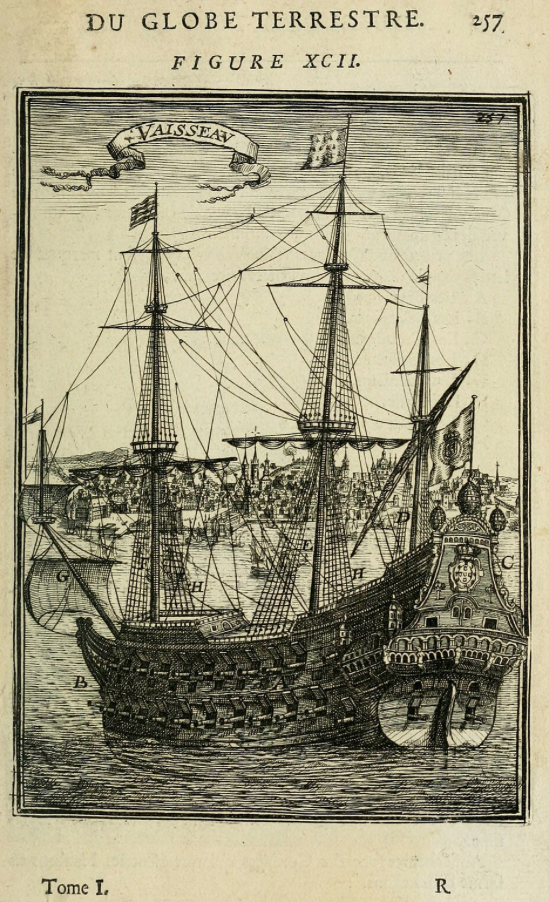
Image for reference only
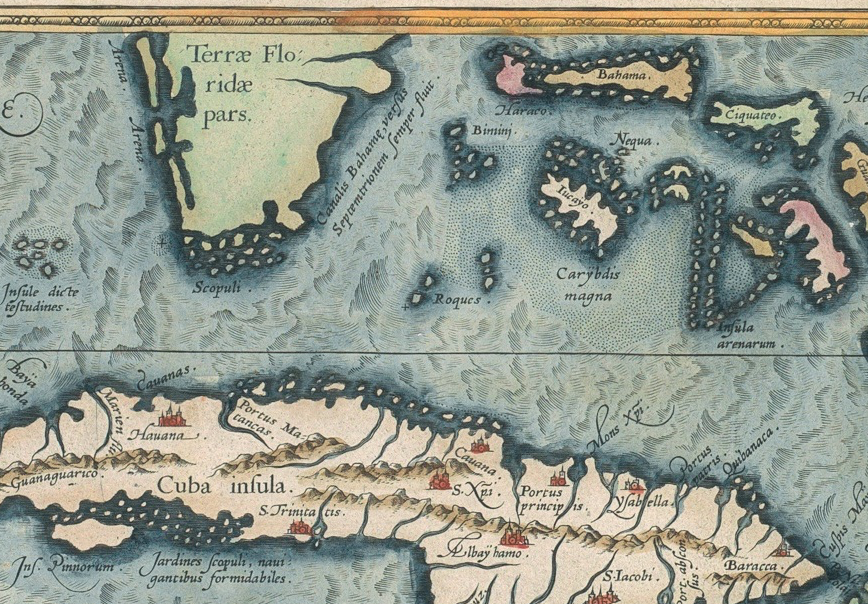
In September 1622, the Spanish galleon Nuestra Señora de Santa Margarita departed Havana as part of the Tierra Firme fleet bound for Spain. Loaded with silver, gold, luxury goods, and undeclared cargo from the Americas, the vessel entered one of the deadliest hurricanes recorded in the early colonial Atlantic. The storm shattered the fleet near the Florida Keys. Several ships were lost, among them the Santa Margarita and the more famous Nuestra Señora de Atocha.
For centuries the wrecks remained scattered beneath shifting sand and shallow water west of Key West, part of a maritime graveyard created by Spain’s transatlantic empire. The cargoes carried aboard those ships represented the accumulated wealth of the Caribbean and mainland Spanish America: silver from Potosí, emeralds from Colombia, gold chains and jewelry, and pearls harvested from the waters surrounding present-day Venezuela more than a century after Christopher Columbus first described the Pearl Coast during his third voyage in 1498.
The Santa Margarita occupies a distinctive place within the history of shipwreck recovery in the Americas. Beginning in the 1960s, treasure hunter Mel Fisher and his team spent years searching for the dispersed remains of the 1622 fleet. Fisher, originally from Indiana, became one of the most recognizable figures in modern underwater salvage. His search evolved into a decades-long enterprise involving archival research, marine archaeology, investor financing, technological experimentation, and prolonged legal disputes over ownership rights and salvage jurisdiction.
The search also carried extraordinary human cost. In 1975, Fisher’s son Dirk Fisher, his daughter-in-law Angel, and diver Rick Gage died when a salvage boat capsized during operations connected to the fleet search. The tragedy became inseparable from the history surrounding the recovery effort and helped transform the search into one of the most publicly followed treasure hunts of the twentieth century.
The remains of the Santa Margarita were identified in 1980 after years of archival reconstruction and underwater exploration. Over time, divers recovered gold bars, silver artifacts, jewelry, chains, and cargo associated with the vessel. Yet among the most historically intriguing discoveries was not gold or silver, but pearls.
In 2007, salvors associated with the Santa Margarita recovery announced the discovery of a sealed lead container reportedly containing more than sixteen thousand natural pearls. The find attracted considerable attention because large archaeological assemblages of natural pearls are exceptionally rare, particularly those connected to the early Caribbean trade routes of the Spanish Empire.
Historically, the connection is direct.
The pearls transported aboard the Santa Margarita almost certainly originated from the same broader pearl-producing region described by early Spanish chroniclers in the sixteenth century: the waters surrounding Cubagua, Margarita, Coche, and the Pearl Coast of northeastern Venezuela. By the early seventeenth century, however, the industry had changed dramatically from the world encountered by Columbus and the first conquistadors.
During the earliest decades of the fisheries, Indigenous divers — particularly the Guaiquerí and related coastal peoples — harvested pearls using techniques refined over generations. Contemporary accounts repeatedly describe pearls drilled by hand using primitive methods. These drilled pearls entered Indigenous adornment, ritual objects, and local exchange networks before becoming incorporated into European commerce.
After the rapid expansion of the Spanish pearl industry, however, the fisheries underwent profound transformation. Indigenous labor was exploited on an enormous scale, later supplemented and in many areas replaced by enslaved African divers. Extraction intensified. Royal taxation systems such as the quinto real encouraged widespread smuggling and undeclared trade. By the seventeenth century, pearls had become standardized cargo within a global imperial network extending from Venezuela to Havana and ultimately to Seville.
The Santa Margarita pearls belong to this later commercial phase of the Caribbean pearl trade.
Gemologically, they provide an important point of comparison with the older pearls possibly associated with Cubagua and the earliest colonial period.
The Santa Margarita pearls remained submerged in a marine environment for nearly four centuries before recovery. Contemporary conservation reports noted that the lead container and surrounding sediment may have helped preserve portions of the assemblage. Even so, specialists and later observers noted that many examples exhibited varying degrees of alteration associated with prolonged underwater exposure and organic change over time. Some pearls later marketed commercially display softened luster, surface chalkiness, discoloration, or evidence of stabilization and conservation treatment.
This condition is historically significant in itself.
Natural pearls are organic gemstones whose long-term preservation depends heavily on environmental conditions. Archaeological pearls have survived for thousands of years under stable circumstances, including examples recovered from ancient burials in the Gulf region and elsewhere. Their condition, however, can vary dramatically depending on burial environment, humidity, water chemistry, temperature fluctuation, and exposure over time.
The Santa Margarita assemblage demonstrates how centuries of immersion in seawater can gradually affect nacre and surface structure, even when pearls are partially protected within sealed containers.
The contrast with the older Cubagua-associated pearls is striking.
Scientific examination of pearls associated with the early Caribbean fisheries and later studied by the Gemological Institute of America, Gübelin Gem Lab, and other institutions revealed examples retaining structural integrity, visible orient, and in some cases ancient drill holes associated with hand workmanship. Radiocarbon dating placed tested specimens broadly within the late pre-contact and early colonial period.
The distinction is not simply one of age.
It reflects two entirely different historical worlds.
The Santa Margarita pearls represent the mature Atlantic trade system of the seventeenth century — commercial cargo moving through imperial shipping routes decades after the destruction of Nueva Cádiz. The earlier Cubagua-associated pearls belong to the formative period of contact itself, when Indigenous craftsmanship, early colonial extraction, and the first stages of transatlantic wealth converged on the Pearl Coast.
One group survived beneath the sea.
The other survived buried within the earth.
Together, they form two rare archaeological windows into the same geographic source region across different centuries of Caribbean history.
For historians and gemologists alike, the comparison is unusually valuable because surviving pearl assemblages from the Caribbean fisheries are extraordinarily uncommon. Many historic pearls were continuously worn, traded, re-mounted, damaged, dispersed, or lost across centuries of human use. Surviving archaeological groups therefore preserve not only gemstones, but material evidence of vanished economies, maritime trade routes, labor systems, craftsmanship, and cultural exchange.
The Santa Margarita discovery remains important not merely as treasure recovery, but as evidence of the enduring reach of the Venezuelan pearl fisheries deep into the seventeenth-century Atlantic economy.
At the same time, the comparison with the older Codex-associated pearls illustrates how preservation environment can shape the survival of natural pearl nacre across centuries. The survival of large Caribbean pearl assemblages — whether beneath the sea or buried in the ground — demonstrates both the remarkable endurance of natural pearls and the importance of historical context in understanding how these organic gemstones pass through time.
In that sense, the wreck of the Santa Margarita serves as a distant echo of the world first described in 1498, when European observers encountered the Pearl Coast and recognized that the waters of northeastern South America contained one of the most coveted luxuries on earth.